
7.1 The Material Limitation of Natural Fiber
For centuries, wicker furniture had an inherent weakness: it was susceptible to environmental damage. Natural materials derived from plants, such as rattan, bamboo, seagrass, and banana leaf, are highly vulnerable to humidity, moisture, and consistent sun exposure. Exposure to rain causes swelling and mildew, while UV radiation causes the fibers to become brittle and crack. Consequently, plant-based wicker was considered a “poor material choice” for furniture intended for year-round outdoor use. This limitation fundamentally restricted the scope of the furniture type, keeping most natural wicker relegated to covered porches or interior spaces.
7.2 The Polymer Revolution: HDPE Genesis (1950s)
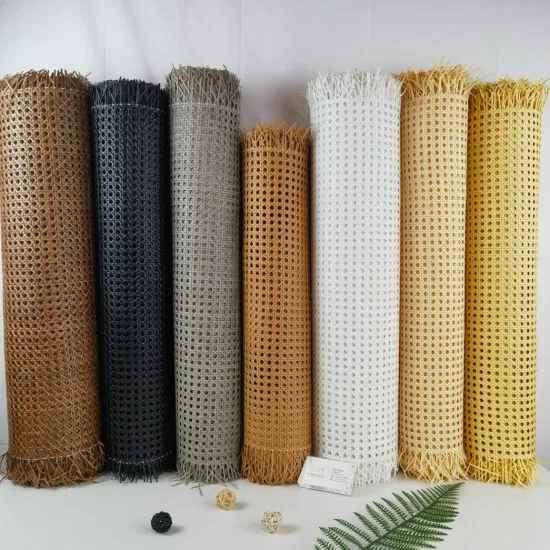
Plastic webbing
The revolution that solved wicker’s historical vulnerability was a breakthrough in material science achieved in the mid-20th century. High-Density Polyethylene (HDPE), the polymer that forms the basis of virtually all high-quality modern synthetic wicker, was developed by researchers J. Paul Hogan and Robert L. Banks at Phillips Petroleum in 1951. This process involved discovering the catalyst necessary to transform ethylene and propylene into solid polymers. The resulting plastic was commercially introduced in 1954 under the brand name Marlex.
HDPE is a polymer produced through the polymerization of ethylene under lower temperature and pressure conditions compared to its predecessors. This process yields a material with minimal branching and a high degree of molecular regularity, resulting in high crystallinity and density. These chemical properties grant HDPE superior tensile strength, chemical resistance, and viscosity. Crucially, HDPE does not emit chemicals, is highly resistant to puncture, and can withstand decades of UV exposure without degradation, unlike lower-quality synthetics such as Polyvinyl Chloride (PVC), which tend to crack and become brittle.
7.3 The Ascendancy of All-Weather Wicker
The development of high-quality synthetic resin provided the woven aesthetic with its most durable form. By the mid-2000s, synthetic resin wicker, often referred to commercially as Poly Rattan and commonly known as plasti-cane, had become the industry standard for commercial-grade outdoor and patio furniture.
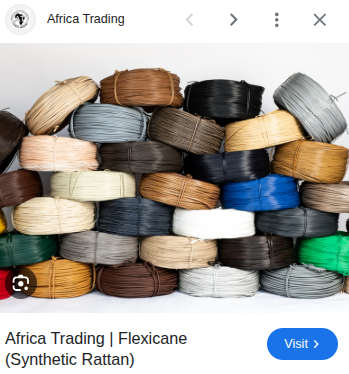
This technological triumph decoupled the beautiful, woven aesthetic from the organic material’s functional frailty. Modern synthetic wicker is woven over durable, lightweight aluminum frames and can be given organic colors that make it virtually indistinguishable from natural wicker, or alternatively, vibrant tones for contemporary design. The success of this engineered material solved the structural weakness of natural fiber, enabling the creation of a massive, permanent “all-weather” outdoor furniture market. The modern consumer gained the low-maintenance durability required for year-round outdoor exposure, a possibility based entirely on the advances in polymer chemistry from the 1950s.