
A History of Wicker from Antiquity to Modern Design
1.1 The Crucial Distinction: Wicker is a Technique, Not a Material
Wicker has maintained its relevance across millennia despite a fundamental misunderstanding of the term itself. The word “wicker” does not refer to a single material; rather, it defines a technique—the process of weaving or plaiting flexible strips into a stiff structural form. Linguistic analysis traces the term’s origin to Scandinavia, derived from the Swedish word vika, meaning “to fold,” or possibly vikker, meaning “willow”.
This definition, establishing wicker as an adaptable method, holds significant implications for its enduring success. Because the craft is fundamentally about folding and weaving, it allows practitioners globally to utilize whatever local, pliable material is available. For instance, European artisans relied on willow (osiers), Egyptians used reed, and later, tropical regions introduced rattan. This inherent adaptability allowed the technology of wicker to travel across continents, survive resource shortages, and continuously reinvent itself, distinguishing its history from those furniture forms strictly tied to a single geographic resource, such as teak or mahogany. Even today, the term applies to products woven from synthetic fibers, demonstrating the persistence of the weaving technique over the source material.
1.2 A Family of Fibers: The Natural Palette of Woven Structures
Historically, the natural palette used in wicker and woven structures has been vast, ranging from slender plant fibers to robust, rope-like materials. This diversity includes osiers (willow twigs), sweet grass, sea grass (often presented as a stiff, twisted rope woven into chevron or chequerboard patterns) , palm leaves, raffia, and even local plant vines such as blackberry. In many cases, materials like grass were historically braided into thick threads and then dried for use in weaving. The adaptability of the craft also extended to using materials like leather, depending on regional availability and functional necessity.
The most significant material in the history of industrial wicker is rattan. Rattan is a climbing palm, botanically classified within the Calamoideae subfamily of the Arecaceae (palm) family. Rattan fibers are highly valued for their strength and flexibility. A specialized material optimization technique evolved around rattan: the strong, thick internal core of the vine is typically used to create the structural frameworks, which can be bent into flowing shapes when steamed. In contrast, the outer skin of the rattan stem, known as “cane,” is flexible, durable, and highly prized for intricate weaving patterns on seats and backs—a technique often referred to specifically as caning. The simultaneous utilization of different parts of the same resource—the core for skeletal strength and the outer layer for fine detailing—demonstrates the sophisticated material science that characterized this craft long before modern industrial processes were applied.
1.3 Anthropological Foundations: Weaving as Survival
The foundations of wicker extend far beyond furniture design, tracing back to the core principles of human innovation and survival. The creation of woven structures is inextricably linked to the earliest human needs—shelter construction and the manufacturing of clothing. The technique of weaving fibers of different plants to create utilitarian objects is noted to be “as ancient to human beings as is agriculture itself”.
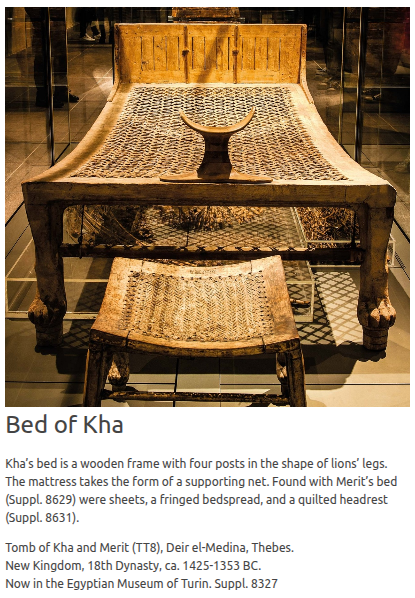
Accordingly, the earliest forms of woven furniture are simply refined extensions of existing basketry techniques. Archaeological and historical evidence shows household items made by weaving plant fibers that have been found in ancient tombs or depicted on classical artwork. The principles governing the selection, classification, and patterns used in mat-weaving and basketry directly informed the structural designs of early woven furniture, confirming basketry as the precursor to the furniture form.
To provide immediate clarity regarding the material terms utilized throughout the history of woven furniture, a comparative table detailing key terminology is provided:
Comparative Materials and Wicker Terminology
| Term/Material | Definition/Origin | Key Application | Historical Period of Dominance |
| Wicker | A weaving technique (Scandinavian: vika, ‘to fold’) | Furniture, baskets, storage | Perpetual (Antiquity to Present) |
| Rattan | Tropical climbing palm (Calamoideae subfamily) | Frame construction, binding, structural integrity | Colonial Era, 19th Century Industrial Era |
| Cane | The outer skin of the rattan stem | Seat/back weaving, intricate patterns (caning) | Victorian Era, Fine Furniture |
| Reed/Grass/Willow | Local European and African plant fibers | Early furniture, simple structures | Antiquity, Folk Crafts |
| Lloyd Loom | Twisted paper wrapped around metal wire | Soft, durable luxury indoor furniture | 1920s–1940s Europe |
| HDPE Resin | High-Density Polyethylene polymer | Weather-resistant, commercial outdoor furniture | 21st Century (post-2000s) |