
2.1 Wicker in Ancient Egypt
The earliest definitive evidence for wicker furniture confirms its status as an ancient craft. Archaeological recordings indicate the existence of woven furniture dating back to 3,000 B.C. in Ancient Egypt.11 The art of wicker, utilizing materials such as grass and cane that grew naturally in the Nile region, spread throughout this area of Africa.3 Think about the biblical story of Moses in the basket.
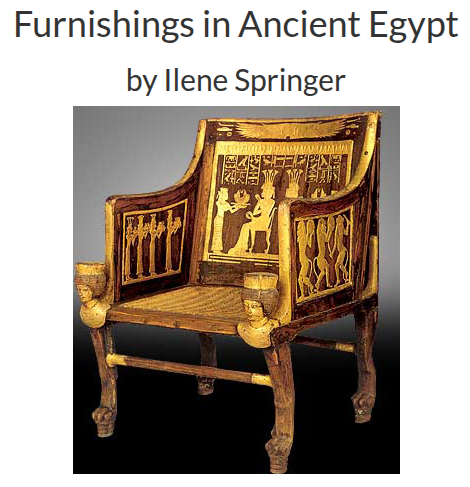
Crucially, wicker chairs and stools were discovered in tombs alongside pharaohs.3 The Metropolitan Museum of Art, for example, possesses a remarkably preserved stool (Object Number: 14.10.3) featuring a woven seat made of wood and reed, dated to the Middle Kingdom–New Kingdom period (approximately 1991–1450 B.C.).12 This artifact was retrieved during the Carnarvon Excavations between 1907 and 1914. The fact that woven objects—made of typically perishable reeds and grasses—were preserved for over four millennia is due largely to the hyper-arid conditions within the Egyptian tombs. Their placement within a royal funerary context is highly significant. It demonstrates that early woven furniture was far from cheap or casual; rather, it was considered a valuable, high-status possession suitable for the afterlife, challenging the modern conception of wicker as purely temporary or rustic seating.
2.2 Wicker in the Classical Mediterranean
Following its establishment in Egypt, the art of weaving quickly disseminated across the ancient world.3 In ancient Greece, the technique was primarily employed in the construction of woven baskets, utilized extensively for storing items and food in various shapes and sizes.13
The Ancient Romans, however, elevated the function of wicker to furniture-making. Wicker chairs were particularly favored by the Roman nobility, affirming the material’s status appeal.13 The advantages of wicker—its relatively light weight compared to heavy stone or metal furniture, and its comfort derived from the resilient weave—made it an attractive option for transport within large Roman villas and properties. Beyond mere functionality, woven objects were integrated into the broader cultural record, depicted on Greek vases, carved onto gravestones, and featured in wall paintings.5 The Roman Empire served as a critical cultural vector, facilitating the dissemination of the woven process across the Mediterranean and into Europe 3, effectively laying the groundwork for its later resurgence.
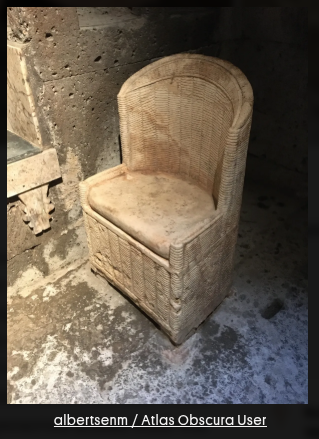
Now I am pretty sure your wicker furniture is not 4000 years old; they should be in a museum then and I will not touch it anyway. But if you chairs look any like this, contact me for a quote:
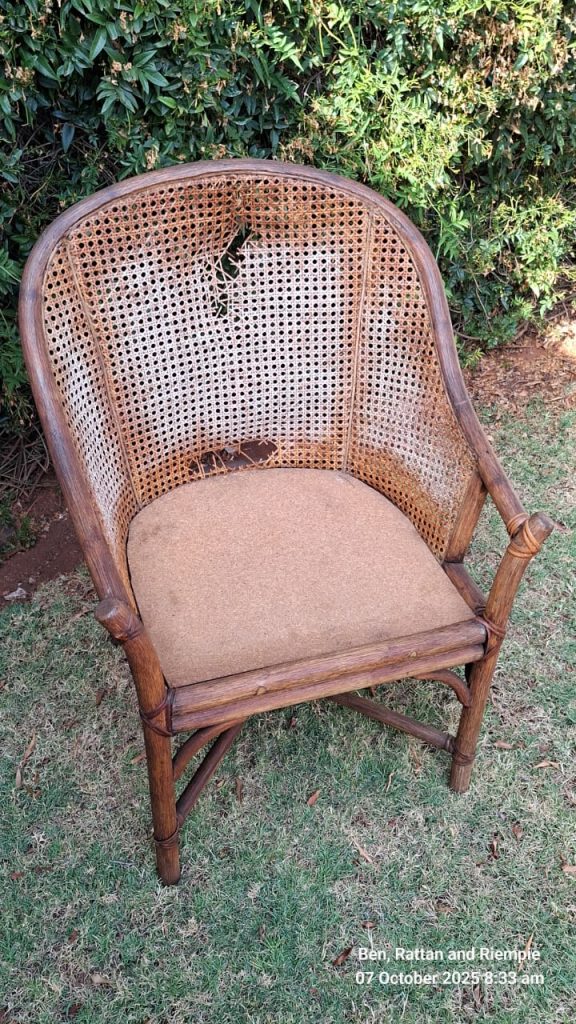
Do you have rattan furniture needing restoration? Contact me with a picture of the furniture in question for an estimate. Yes, it is an estimate because pictures don’t always tell the whole story, and once I see the actual piece, there may be other issues that also requires attention.
Get an estimate by using the contact form here (https://rattanandriempie.co.za/social-media) or the whatsapp at the left bottom corner of the page, or this link http://wa.me/27764989916.